


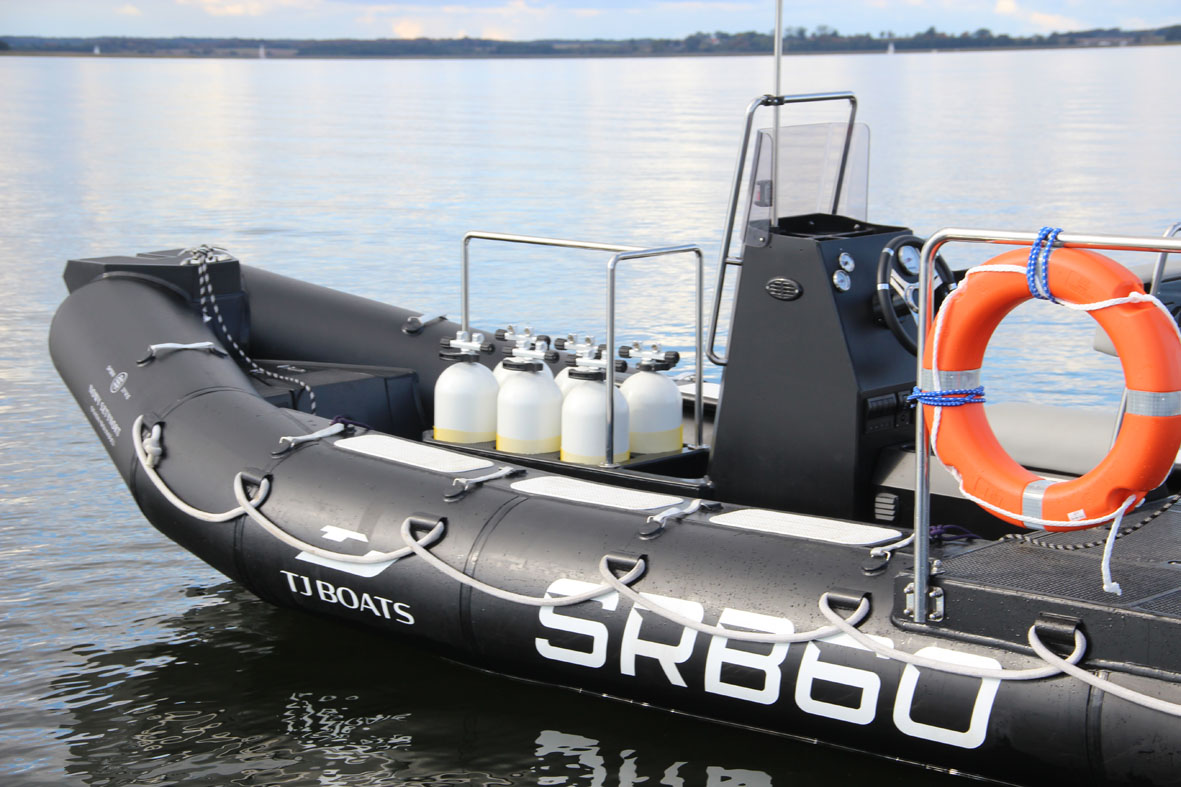
HDPE Boats for Port Services and Military – Modern Solutions by TJ Boats
Military and port utility craft manufactured from High-Density Polyethylene (HDPE) represent a profound revolution in vessel design for specialized tactical operations. The SRB60 series by TJ Boats merges advanced HDPE hull technology with rigid hybrid (RIB-type) architecture, eliminating the primary hazard of traditional inflatable pontoons – susceptibility to puncture and fabric tearing – while delivering stellar seakeeping dynamics. The SRB60 Dive and SRB60 Pilot House models are purpose-built for demanding naval, maritime security, search and rescue, and commercial port operations.
Technical Specifications of the SRB60 Craft
The SRB60 series craft measure 5.83 metres in length with a 2.20-metre beam, certified to accommodate up to 10 personnel. Recommended outboard propulsion ranges from 90 to 150 HP. The monolithic hull is manufactured entirely from premium structural HDPE, designed and fabricated in Poland. Craft hold full CE Category C (Coastal) certification for rigorous coastal and inshore missions.
Advantages of HDPE Technology in Military and Port Craft
SAFETY AND UNSINKABILITY
Inherent Positive Buoyancy: HDPE is naturally less dense than water, providing natural flotation even under extreme hull compromise.
Unsinkable Architecture: Buoyancy tubes compartmentalised with watertight bulkheads eliminate catastrophic sinking hazards.
High-Grip Decking: Premium anti-slip textured surfaces prevent crew slips and falls during high-speed tactical maneuvers.
STRENGTH AND IMPACT RESISTANCE
Impact Absorption: The polymer dampens kinetic shocks and hull slamming far better than aluminium or brittle fibreglass.
Puncture Immunity: Vastly superior puncture and tear resistance compared to conventional fabric inflatables.
Corrosion Resistance: Total immunity to saltwater, aggressive industrial chemicals, and electrolytic pitting.
UV Stability: High-grade carbon-black stabilised HDPE resists solar degradation and embrittlement.
Temperature Tolerance: Maintains full mechanical toughness and impact resistance from -60°C to +80°C.
CHEMICAL PROPERTIES
Physiological Neutrality: Safe, non-toxic polymer releasing zero harmful chemicals or biocides into water.
Chemical Resistance: Impermeable to battery acids, aggressive industrial chemicals, fuels, and oxidising agents.
Biofouling Resistance: Low surface energy naturally impedes invasive biological adhesion.
OPERATION AND MAINTENANCE
Effortless Maintenance: Non-porous surface cleans rapidly with plain fresh water; zero corrosion.
Multi-Decade Durability: Engineered for over 20 to 50 years of active operational service without structural fatigue.
Simple Repairability: Swift, seamless repairs achievable in field conditions via plastic extrusion welding.
Lifecycle Economy: Extremely low energy requirement for operation; zero repainting or gelcoat maintenance.
OPERATIONAL PARAMETERS
Lightweight Construction: Lower displacement than steel workboats while delivering higher impact absorption.
Structural Elasticity: Absorbs hull flex and heavy wave-slap without risk of structural cracking.
Environmental Sustainability: 100% recyclable material at the conclusion of its extensive service life.
Military, Tactical and Port Applications
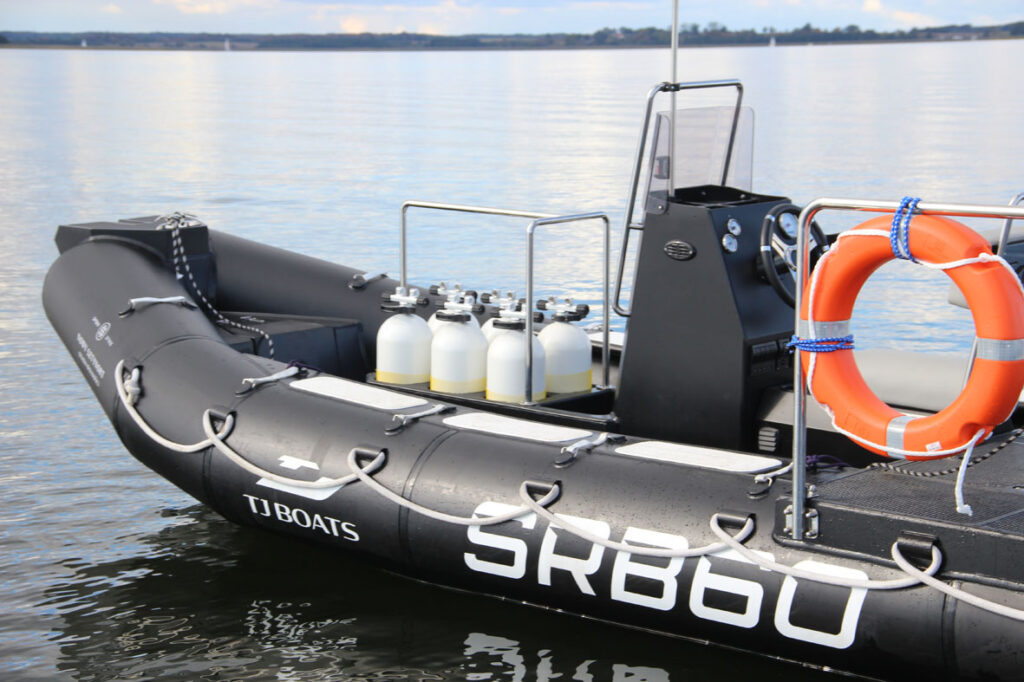
SRB60 Dive Craft – Diving and Special Operations
The SRB60 Dive model is engineered specifically for tactical diving, amphibious insertion, boarding teams, and salvage operations. Its rugged construction and unsinkable hull make it an ideal platform for special forces, combat divers, and underwater salvage squads. High impact resistance allows confident direct mooring alongside steel ship hulls, concrete quays, and offshore platforms in turbulent sea states.
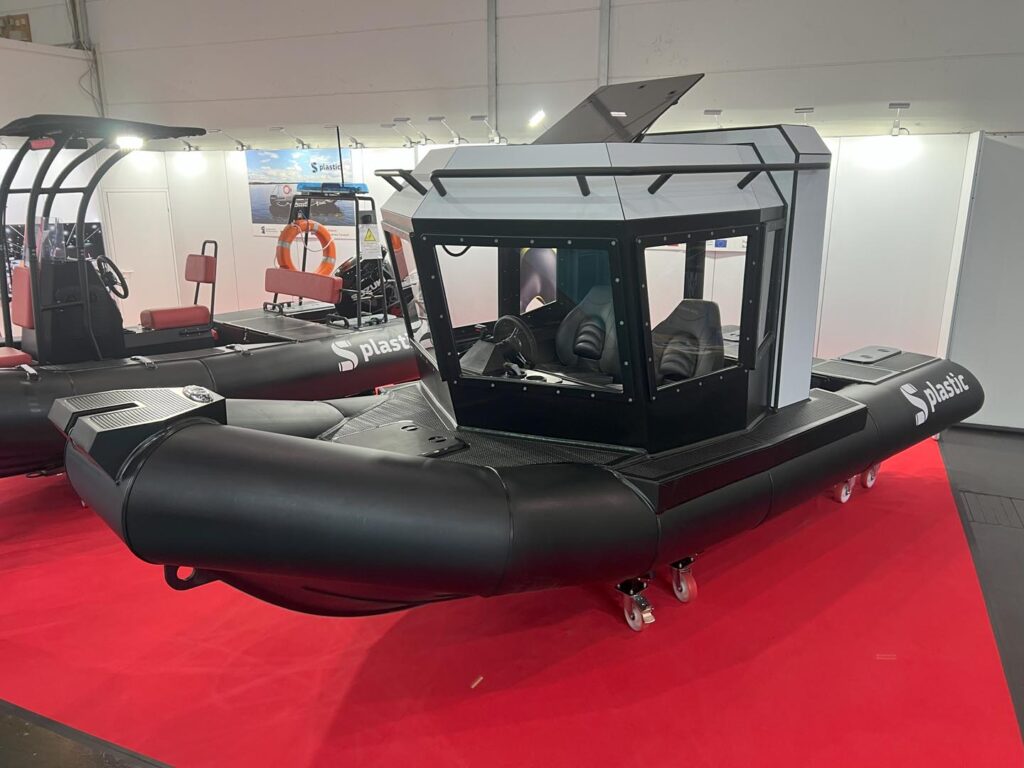
SRB60 Pilot House – All-Weather Crew Protection
The SRB60 Pilot House variant provides a fully enclosed, heated wheelhouse that shields helmsmen and tactical operators from harsh marine weather, freezing spray, and heavy seas. The enclosed cockpit enables year-round operational readiness regardless of sub-zero temperatures or blinding rain. This configuration is highly valued by port security authorities, coastguards, and naval patrol flotillas.
Superiority Over Conventional Hull Materials
A direct technical comparison of HDPE against marine aluminium and fibreglass (GRP) unequivocally confirms its superiority in military, tactical, and port operations. Impact resistance, abrasion tolerance, UV endurance, and puncture resilience far exceed aluminium and vastly outperform brittle fibreglass laminates. At the same time, the lighter weight translates into higher speeds, agile handling, and lower fuel burn. Unlike aluminium, HDPE never suffers from costly electrolytic corrosion, stress fatigue, or paint bubbling.
Frequently Asked Questions (FAQ)
Are polyethylene boats suitable for military and tactical operations?
Yes, HDPE boats are ideally suited for military operations due to their high impact absorption, puncture immunity, low radar/acoustic signature, and resilience under extreme combat and weather conditions. The SRB60 series is engineered in Poland specifically for demanding tactical missions, amphibious landings, and boarding operations.
What are the main advantages of HDPE boats for port authorities?
HDPE craft provide guaranteed unsinkability, total corrosion immunity in industrial saltwater, low lifecycle maintenance, and a working life of over 20 to 50 years. They require no expensive dry-docking for rust removal or hull repainting, substantially cutting operating overheads.
How safe are polyethylene military craft?
HDPE tactical craft are exceptionally safe thanks to the positive buoyancy of the polymer, compartmentalised watertight buoyancy chambers, and extensive anti-slip decking. Because HDPE floats naturally on water, the craft cannot sink even if catastrophic damage occurs.
What is the expected service lifespan of an HDPE SRB60?
With basic operational care, HDPE craft deliver active service lives exceeding 20 to 50 years without requiring costly structural overhauls. The polymer does not degrade from UV rays, saltwater corrosion, or chemical spills.
Do polyethylene boats require special maintenance?
No, maintenance is remarkably simple. The non-porous polymer surface is easily washed down, and the absence of metallic skin plating eliminates corrosion issues. In the rare event of damage, repairs are swiftly executed via plastic extrusion welding.
How does the SRB60 perform in extreme climates?
HDPE retains full mechanical strength and elasticity across a wide temperature spectrum (-60°C to +80°C). It does not become brittle in freezing arctic ice waters and does not deform in equatorial heat, enabling dependable year-round service.
Are polyethylene tactical boats environmentally sustainable?
Yes, HDPE is a non-toxic polymer that is 100% recyclable upon remelting. Unlike fibreglass, which is virtually impossible to recycle and ends up in landfill, polyethylene can be completely reprocessed, offering a sustainable choice for military procurement.
What is the operational difference between the SRB60 Dive and Pilot House?
The SRB60 Dive is configured for open tactical diving and boarding operations with an expansive working deck and boarding ramps. The SRB60 Pilot House features an enclosed, heated wheelhouse that shields personnel from freezing weather during multi-hour surveillance and security patrols.
Are HDPE craft resistant to chemical spills and fuel?
Yes, HDPE exhibits exceptional chemical resistance to acids, alkalis, road/sea salts, fuels, oils, and organic solvents. This property makes it the premier platform for industrial harbours, chemical response, and operations in polluted waters.
How many personnel can the SRB60 accommodate?
The SRB60 accommodates up to 10 personnel and is CE Category C certified for coastal waters. The vessel measures 5.83 m in length, 2.20 m in beam, and supports outboard power ratings from 90 to 150 HP.