


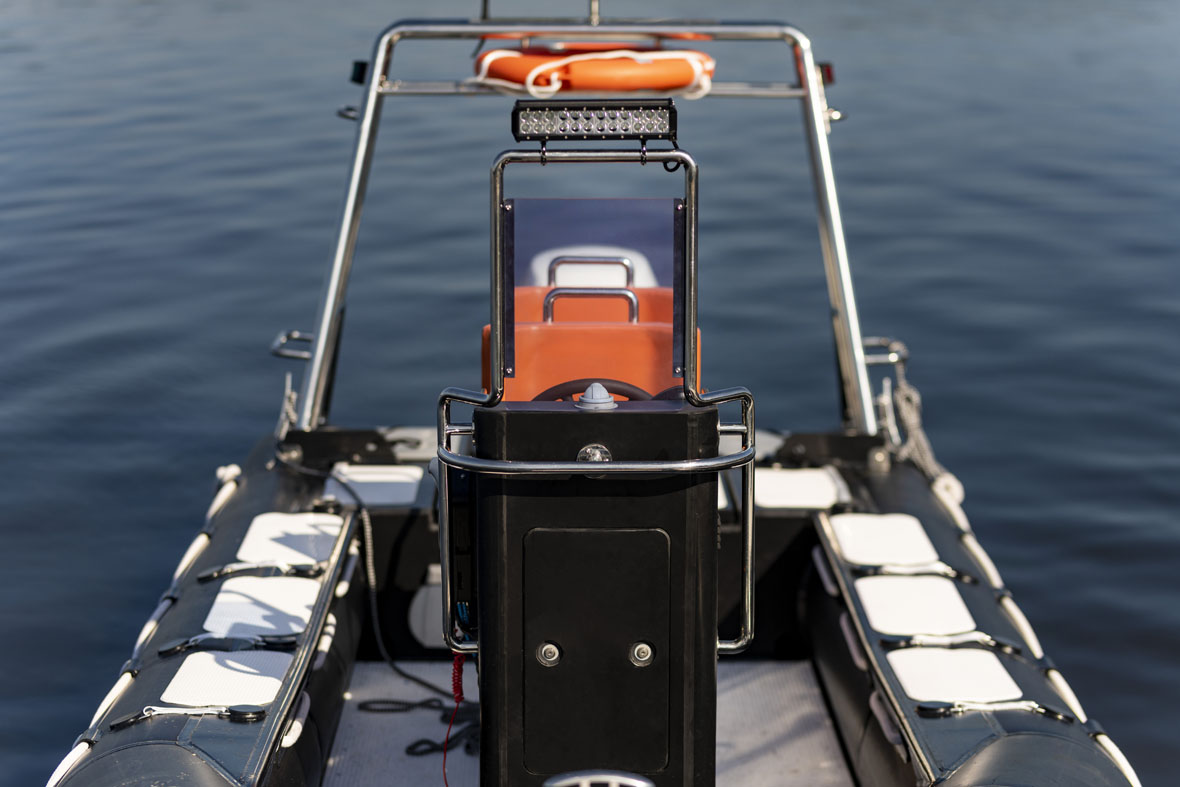
HDPE Rescue Boats – Professional Equipment for Lifeguards and Emergency Services
Rescue craft engineered in High-Density Polyethylene (HDPE) are state-of-the-art vessels specifically designed for emergency responders – professional lifeguards, water rescue organisations, and volunteer as well as professional fire brigades. Advanced HDPE polymer technology combined with a hybrid rigid hull (RIB-type geometry) eliminates the principal vulnerabilities of traditional fabric inflatables while delivering extraordinary seaworthiness, stability, and rugged operational readiness.
HDPE Craft in Lifeguard and Water Rescue Operations
Primary Craft for Water Rescue Services
Water rescue services and coastal lifeguards rely on polyethylene boats as a critical component of safety operations across inland lakes, rivers, and coastal beaches. HDPE rescue craft represent a modern, motorized alternative to traditional rowed skiffs, featuring an inherently unsinkable multi-chamber hull that remains floating even when completely swamped. For water rescue teams, the shallow draft of polyethylene hulls allows swift navigation in shallow sandbars and rapid casualty extraction in difficult-to-reach shallows.
On-Water Resuscitation & Treatment Platform
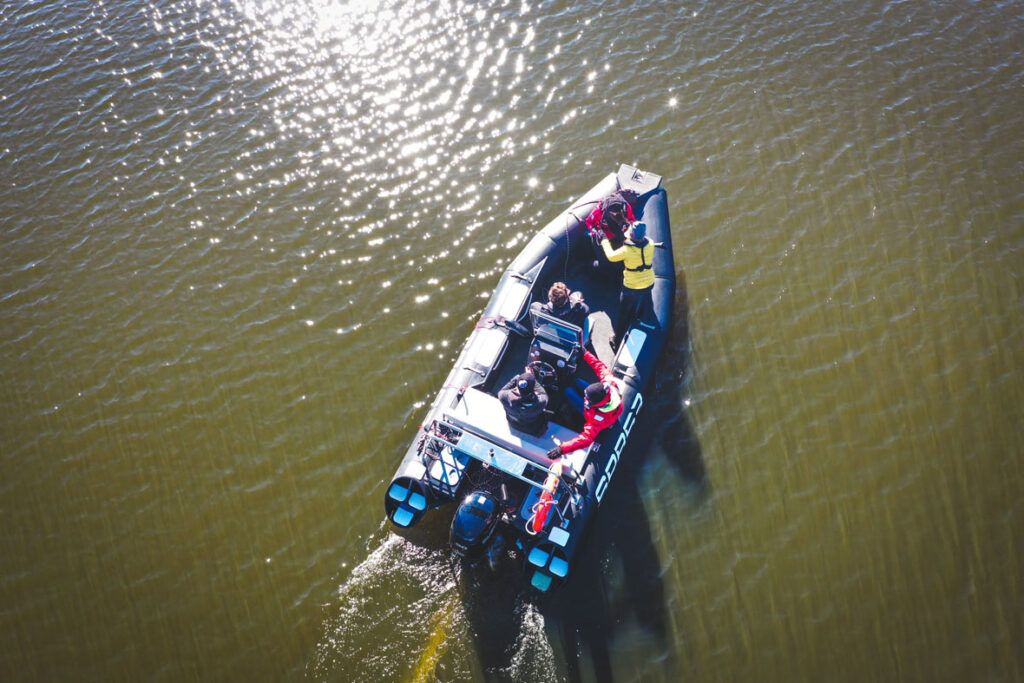
The modern SRB60 rescue craft offers an enlarged, open forward resuscitation deck sized to permit full CPR and emergency medical intervention directly on the water. A wide, lowered bow platform facilitates effortless casualty recovery from the water and serves as an ergonomic boarding stage for rescue divers. With a certified capacity of 8 to 10 personnel and a payload limit of 1,390 kg, the SRB60 is an invaluable asset during mass casualty incidents and aquatic emergencies.
Outfitting Engineered for Rescue Professionals
HDPE rescue craft for emergency services feature extensive high-grip anti-slip deck coatings and ergonomic grab rails that maximize crew safety during high-speed, dynamic maneuvers. Generous watertight lockers stow vital rescue equipment, including rescue tubes, spineboards, diving gear, and emergency medical trauma kits. The heavy-duty hull geometry provides exceptional transverse stability – resisting significant heel even when loaded with up to 500 kg along a single gunwale during active water extractions.
HDPE Boats for Volunteer and Professional Fire Brigades
Readiness for Flood and Disaster Relief
Volunteer and municipal fire services form the core of emergency response systems and must maintain non-stop waterborne intervention capability. HDPE boats ideally meet the requirements of fire brigades due to their zero-maintenance design: they remain perpetually ready for immediate deployment during sudden flash floods and severe weather emergencies. Rapid operational readiness is paramount during widespread flood crises where thousands of responders are mobilized across submerged urban and rural areas.
Versatility Across Emergency Operations
Firefighters perform diverse water operations including levee monitoring, flood barrier reinforcement, residential evacuation, and delivering life-saving food, medical supplies, and generators to isolated flooded zones. Thanks to their extreme structural toughness, HDPE hulls can be beached directly onto rocky debris, crushed masonry, and submerged hazards without risk of puncture or hull cracking. Total resistance to impacts, abrasion, and aggressive chemical contaminants ensures reliable service in contaminated floodwaters.
Deployment in Regional Emergency Response Units
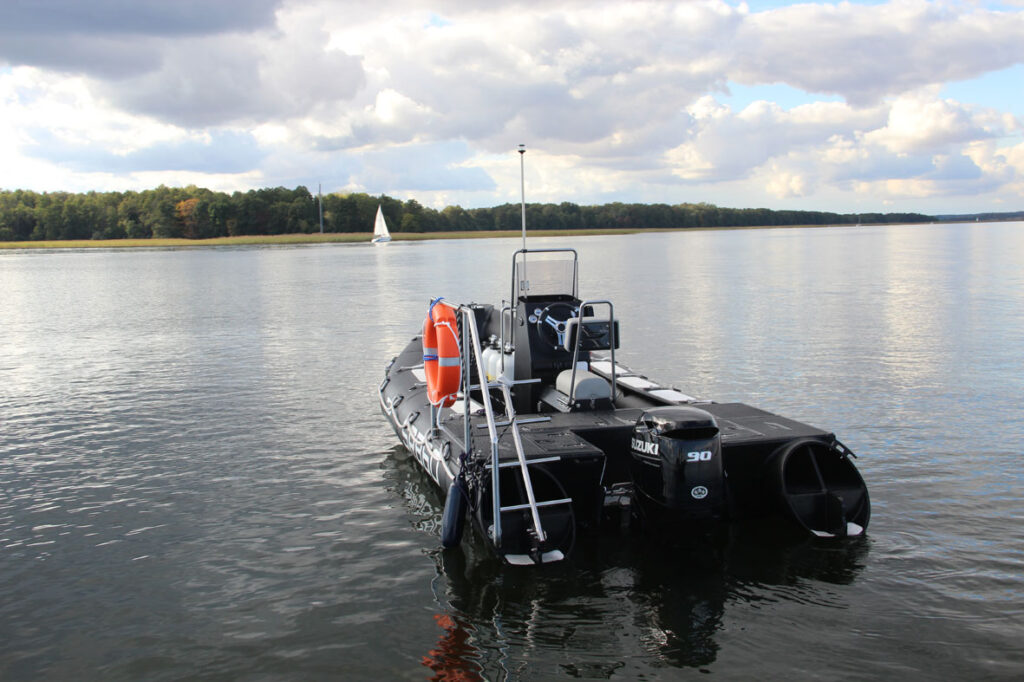
Emergency response frameworks deploy rescue boats across basic and specialist water rescue units, where craft are deployed for surface recovery, casualty extraction, dive support, and mass evacuation. Specialist water-rescue and diving squads utilize purpose-built HDPE craft configured with dedicated equipment racks and dive ladders, ensuring rapid, safe transport of dive teams and heavy underwater salvage equipment.
Shared Strategic Benefits for Emergency Services
Unsinkable Architecture Ensuring Crew Safety
The SRB series pairs a rigid HDPE multi-layer hull with heavy-duty segmented buoyancy chambers, guaranteeing absolute unsinkability even in the event of extreme mechanical trauma. This architecture provides rock-solid stability, high reserve buoyancy, and uncompromising safety in adverse weather – essential prerequisites for the life-saving work of rescue services. Slip-resistant surfaces and heavy-duty grab handles protect crew members during sharp wave impacts and rescue maneuvers.
Cost-Effective Lifecycle for Public Fleets
Polyethylene boats eliminate all typical maintenance routines associated with fibreglass: no antifouling painting, no seasonal lacquering, and no gelcoat blister or osmosis treatments. This delivers dramatic lifecycle savings for municipal and volunteer fire services operating within strict public budgets. The smooth, non-porous polymer surface is easily sanitized, while the non-metallic hull construction completely eliminates galvanic corrosion in aggressive aquatic environments.
Quality HDPE rescue boats provide an active operational service life exceeding 20 to 50 years without requiring costly overhauls or structural replacements. The material does not degrade under UV exposure, does not rot, and is immune to osmosis, ensuring dependable performance over decades of seasonal beach patrols and flood operations. This unmatched durability provides peace of mind for public safety authorities needing equipment ready for instant call-out.
Technical Specifications of the SRB60 Rescue Craft
Engineering Metrics Tailored for Rapid Rescue
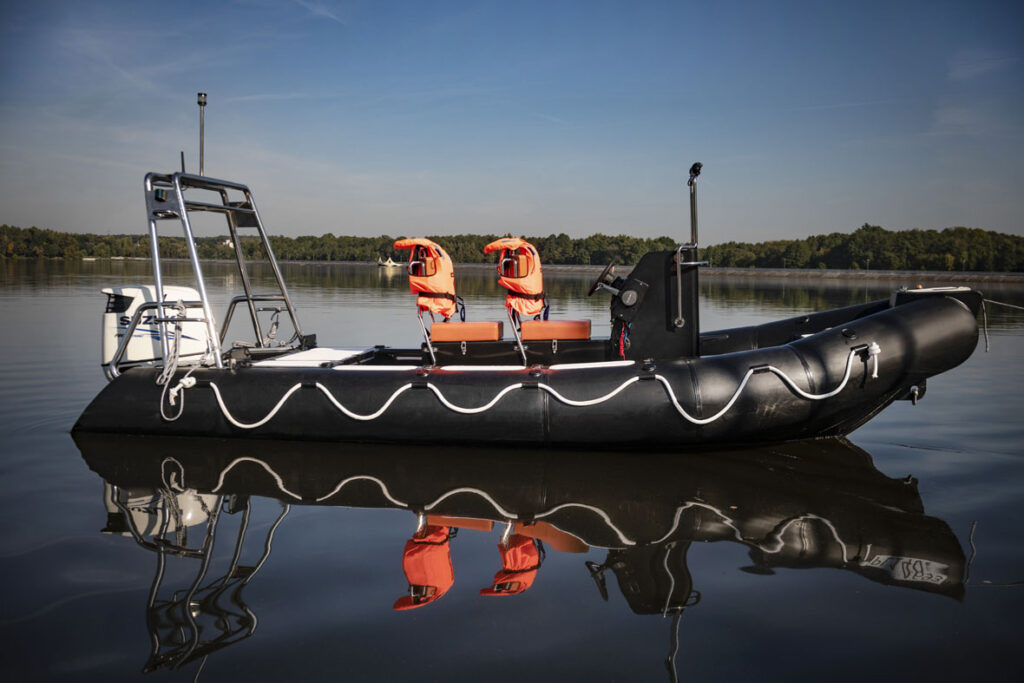
The SRB60 rescue series provides flexible configurations tailored to the precise mission profiles of emergency services. The standard SRB60 measures 5.83 m in length, 2.20 m in beam, and safely transports 8 to 10 personnel with a rated payload of 1,390 kg. Certified under CE Category C (coastal and inland waters), it pairs with outboard engines from 80 to 150 HP to achieve the high speeds needed for rapid emergency response.
With a dry hull weight of approximately 1,100 kg and an integrated 150-litre fuel tank, the craft delivers extensive operating range for extended search & rescue sweeps and long-duration flood operations. Construction complies fully with EU Directive 2013/53/EU, certifying adherence to the highest maritime safety standards.
Specialised Mission Configurations
The SRB60 is available in multiple purpose-built variants: from an open rapid-patrol setup to the SRB60 Dive with dedicated dive-team outfitting, and the enclosed SRB60 Pilot House with a weatherproof wheelhouse protecting crew and medical equipment during winter storms. Modular layouts allow each boat to be tailored to local geographic conditions, whether for ocean surf zones or inland river networks.
Operational Advantages of HDPE in Rescue Missions
Structural Toughness Under Extreme Conditions
Craft built in HDPE feature seamless, heavy-walled polymer hulls that endure the most punishing operational conditions. Extreme resistance to impact and abrasion allows rescue crews to ground the vessel onto rock shoals, broken concrete, or metal debris that would instantly puncture a fabric RIB or shatter a fibreglass keel. Low-friction hull properties also allow smooth sliding over shallows and mud banks.
Chemical Resistance and Environmental Immunity
High-Density Polyethylene provides total chemical immunity to acids, alkalis, industrial salts, and chemical spills. This capability is vital during emergency operations in polluted industrial waters or toxic flood runoff. Complete UV stabilization prevents molecular degradation during decades of constant outdoor sun exposure.
Sustainable Solution for Public Procurement
HDPE is a 100% recyclable engineering polymer, and hulls can incorporate recycled polymers during production. The lifecycle carbon footprint of an HDPE craft is up to 30% lower than traditional composite layups, aligning perfectly with sustainable public procurement criteria for regional emergency authorities and rescue services.
Frequently Asked Questions (FAQ)
Why do water rescue and lifeguard services choose HDPE boats?
HDPE rescue boats feature an unsinkable hull with compartmentalised buoyancy chambers that keeps the craft fully afloat even if completely swamped with water – a vital life-safety factor for rescue crews. The expansive resuscitation deck allows medical CPR to be performed immediately on scene, while the lowered bow platform facilitates effortless retrieval of casualties. Additionally, zero maintenance and no antifouling painting drastically reduce operational expenses during intensive seasonal beach patrols.
What advantages do HDPE boats offer for volunteer and municipal fire brigades?
Polyethylene craft require zero seasonal maintenance, ensuring they remain 100% operational and ready for immediate deployment during sudden flash flood emergencies. Outstanding impact resistance permits confident navigation and mooring along rocky shores, debris-strewn floodwaters, and submerged obstacles without hull damage. Total chemical immunity also allows safe operation in toxic chemical spills and contaminated industrial runoff.
How many persons and what payload can the SRB60 carry during an emergency?
The SRB60 is certified for 8 to 10 personnel with a generous total payload capacity of 1,390 kg. This allows rescue teams to comfortably transport an extraction crew, recovered casualties, and heavy specialized gear such as spineboards, trauma bags, diving equipment, and emergency pump gear.
How safe are HDPE boats during high-speed rescue operations?
The SRB60 is CE Category C certified in accordance with EU Directive 2013/53/EU. Its unsinkable multi-chamber hull and high-friction anti-slip decks offer superb safety during high-speed turns. High transverse stability prevents dangerous heeling even when concentrated weight (up to 500 kg) is positioned along one side during casualty boarding.
What is the expected service life of HDPE boats in rescue service?
A well-maintained HDPE rescue boat easily achieves a working life exceeding 20 to 50 years without structural fatigue, cracking, or hull replacement. Polyethylene does not degrade from UV rays, never suffers from osmosis, and is totally immune to saltwater corrosion.
What are the maintenance requirements and costs for HDPE rescue boats?
Maintenance requirements are practically zero. HDPE craft do not require antifouling paint, protective varnishing, or gelcoat repairs. Cleaning is accomplished simply with fresh water, and the complete absence of metal hull skin eliminates electrolytic corrosion, drastically lowering lifecycle fleet expenses.
What outboard engine power is recommended for rescue applications?
The SRB60 is engineered for outboard engines ranging from 80 to 150 HP. Higher horsepower configurations deliver the rapid acceleration and dynamic reserve power needed to reach emergency sites quickly and execute swift upstream recoveries in swollen rivers.
Can HDPE rescue craft operate in shallow waters and flooded urban zones?
Yes. The shallow draft and slippery, abrasion-resistant polyethylene hull allow navigation in shallow waterways, flooded roads, and debris-filled floodwaters where fibreglass or propeller-fragile craft would be grounded or damaged. The hull slides smoothly over gravel banks and submerged obstacles without harm.
Can the SRB60 be outfitted with specialized rescue and diving equipment?
Yes. The SRB60 provides ample storage compartments and modular mounting points for stretcher brackets, tow arches, blue-light LED warning systems, sonar, navigation plotters, diving tank racks, folding recovery ladders, and fire pump connections tailored to each agency’s protocol.