


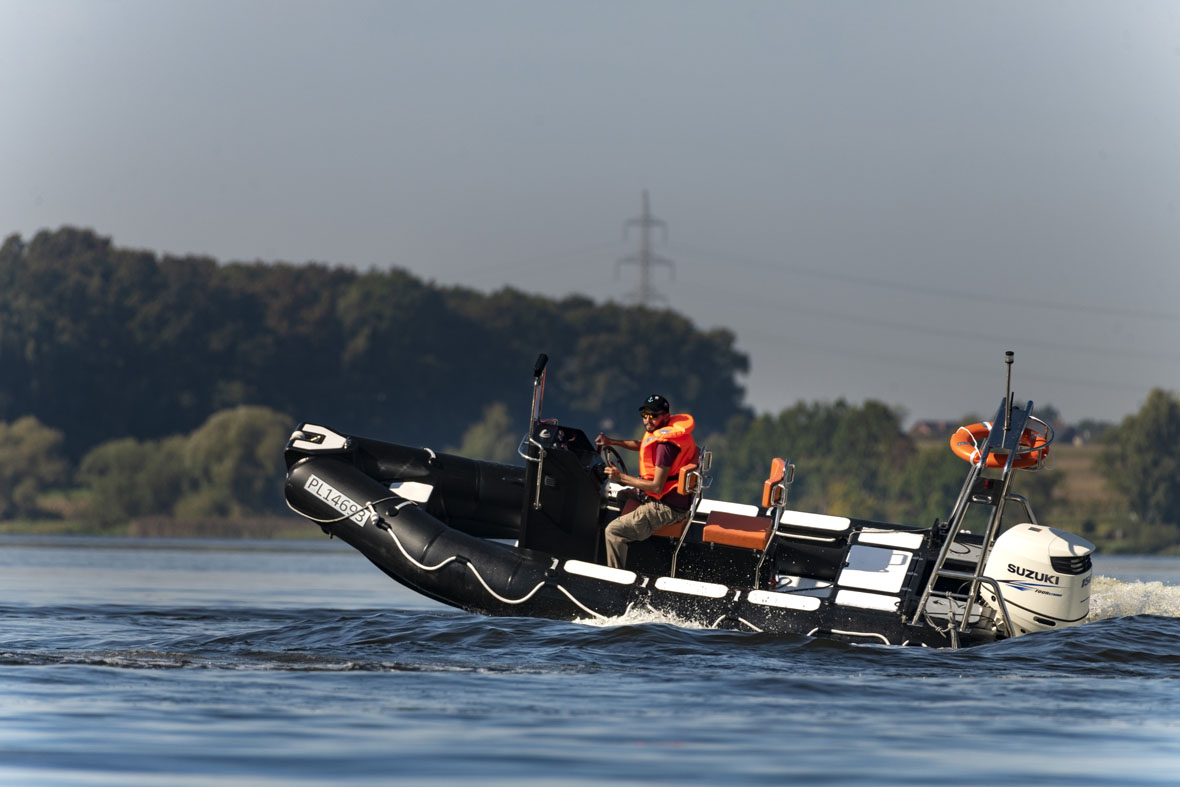
HDPE Patrol Boats – Modern Solution for Rescue Services and Water Police
High-Density Polyethylene (HDPE) patrol boats are cutting-edge marine craft rapidly establishing new operational standards for water rescue agencies and marine police forces across Europe. HDPE combines monumental toughness, low structural weight, and complete resistance to harsh environmental conditions, providing an indispensable asset for high-speed intercept, patrol, and emergency response. Hybrid RIB craft engineered in HDPE – such as the flagship SRB60 – deliver all the dynamic advantages of conventional rigid inflatable boats while eliminating their single greatest vulnerability: susceptibility to puncture, tearing, and tube degradation.
Operational Deployment of HDPE Patrol Boats
Water Police and Rescue Services
Police and rescue patrol craft (frequently deployed as heavy-duty rescue RIBs) monitor vital waterways, protect strategic maritime infrastructure, and deliver rapid response to marine incidents. Modern law enforcement fleets deploy high-specification HDPE patrol craft to combat illegal fishing, protect coastal ecosystems against environmental pollution, enforce maritime security, and maintain public safety on both inland rivers and crowded coastal waters.
Search, Rescue and Crisis Response
Agency patrol and rescue boats must perform flawlessly in the most hostile marine environments. Thanks to their high acceleration, swift handling, and rough-water agility, these craft can navigate into shallow or debris-strewn waters inaccessible to larger vessels, drastically increasing survivor rescue rates during critical operations. Furthermore, police patrol units utilize these versatile platforms to assist partner services during severe flooding, coastal emergencies, and ecological disaster response.
Advantages of HDPE in Patrol Craft
1. Unmatched Strength and Structural Durability
Impact Resistance
HDPE patrol craft exhibit monumental resistance to mechanical impacts, making them exceptionally reliable in debris-strewn rivers, shallow channels, and rocky coastal environments. The polymer absorbs kinetic impact energy far more effectively than fibreglass or aluminium, preventing structural breaches and costly hull damage.
Extensive commercial trials demonstrate that hybrid HDPE hulls match or exceed traditional inflatable RIBs in maneuverability and speed, while providing vastly superior structural longevity and shock resilience.
Operational Longevity
A well-maintained HDPE patrol boat reliably achieves a working life exceeding 20 to 50 years without requiring costly structural overhauls. This exceptional durability makes it an extraordinarily cost-effective solution for municipal budgets, government agencies, and public emergency services.
2. Corrosion Immunity and Environmental Resilience
Total Corrosion Resistance
Unlike steel or aluminium hulls, HDPE craft never corrode when exposed to saltwater, brackish estuaries, or aggressive industrial runoffs. The seamless, multi-layer hull structure provides total resistance to UV degradation, heavy impacts, and galvanic corrosion.
Because the material naturally prevents marine growth adhesion, no toxic antifouling paint is required, drastically slashing routine maintenance costs and shipyard downtime.
Material Stability
HDPE is entirely immune to hull osmosis, gelcoat cracking, and peeling. The ultra-smooth hull surface facilitates effortless cleaning with plain water, and the complete absence of metal skin plating eliminates electrolytic corrosion entirely.
3. Low Weight and High Inherent Buoyancy
Enhanced Efficiency & Speed
HDPE craft are considerably lighter than steel workboats, delivering superior fuel efficiency, quicker throttle response, and lower operational emissions. Lower weight also simplifies road trailering and slipway launching.
HDPE rescue and patrol craft combine agile lightweight construction with monolithic strength, enabling rapid acceleration and pinpoint maneuvering essential during critical rescue interceptions.
Unsinkable Architecture
Thanks to its molecular structure, HDPE is naturally less dense than water, granting positive inherent buoyancy. Even in the extreme event of hull compromise, the vessel remains naturally buoyant, providing unrivaled safety for onboard personnel.
4. Operational Safety and Dynamic Stability
Natural positive buoyancy and high impact damping ensure highest-tier operational safety. The polymer does not shatter under severe dynamic stress and does not propagate open flame, creating a secure working environment for tactical crews.
Craft are engineered with a wide beam and optimized hull sections that minimize rolling, delivering an exceptionally stable, dry work platform even in choppy waves, high winds, and disturbed wake conditions.
5. Zero-Maintenance Ownership
HDPE patrol boats require virtually zero routine maintenance. The inert polymer construction eliminates sanding, re-tubing, repainting, and sacrificial anode changes typical of conventional craft.
Eliminating painting, polishing, and gelcoat upkeep sharply curtails annual operating expenditures and eliminates fleet downtime, ensuring near-constant mission readiness.
6. Elasticity and Wave Shock Absorption
HDPE actively dampens vibration, hull drumming, and water slap, producing a noticeably smoother, quieter ride than rigid aluminium or fibreglass hulls. The material’s natural elasticity absorbs wave slamming forces, reducing crew fatigue.
Craft maintain full structural toughness and mechanical integrity across extreme temperature ranges, a vital capability for year-round emergency deployments.
7. Sustainability and Ecological Responsibility
HDPE is a 100% recyclable structural polymer. Many components can be produced from high-grade recycled resins, and complete hulls can be fully melted down and repurposed at end-of-life.
The manufacturing carbon footprint of an HDPE hull can be up to 30% lower than that of conventional rubber RIBs and complex fibreglass layups, offering a genuinely sustainable choice for green public procurement.
8. Mission Versatility and Customisation
HDPE construction affords total design freedom, facilitating straightforward integration of specialist police, rescue, communication, and tactical equipment directly onto the hull structure.
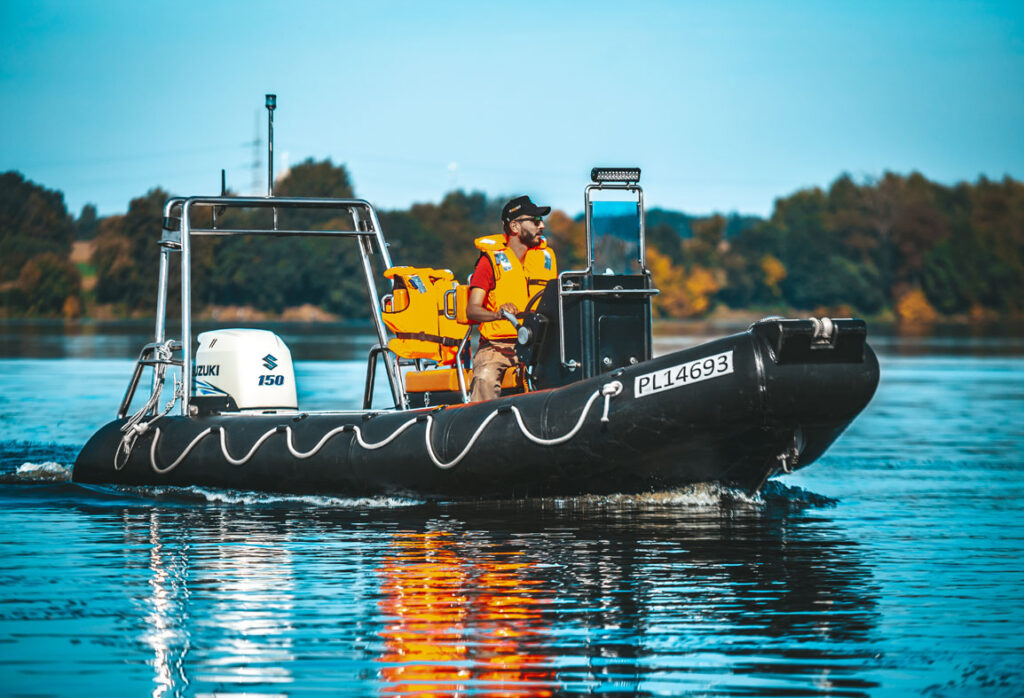
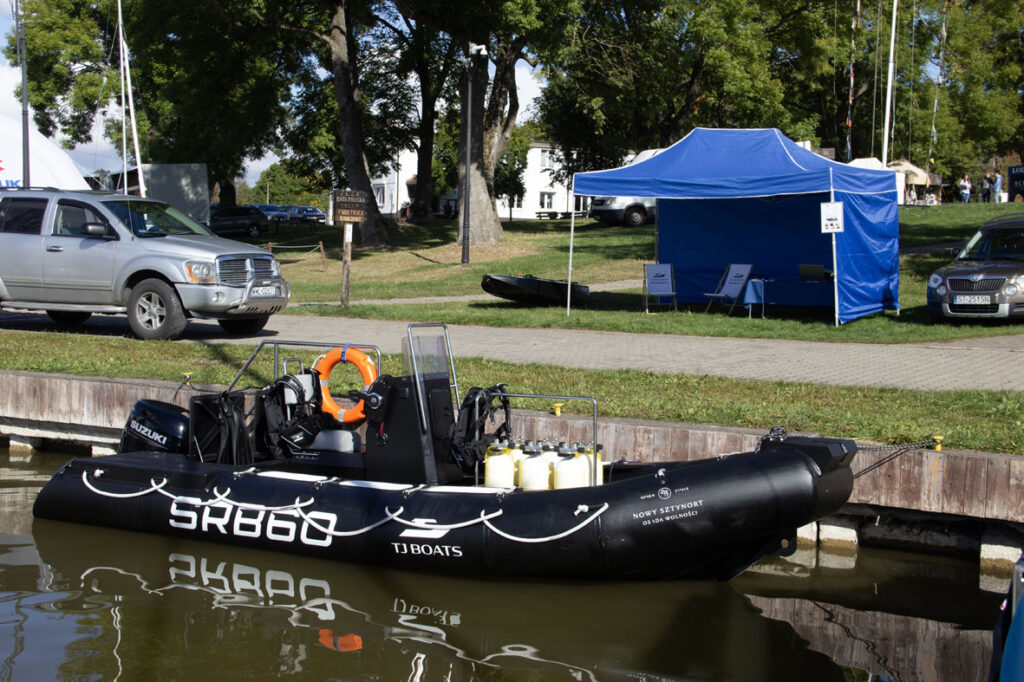
The SRB series offers hull lengths ranging from 4 to 10 metres. The popular SRB60 model – measuring 5.83 m in length, weighing approximately 1,100 kg, and safely accommodating up to 8–10 personnel – perfectly satisfies the demanding needs of police departments, search & rescue teams, and commercial harbour authorities.
Specialist Equipment for Agency Patrol Boats
Water police and rescue patrol vessels require comprehensive specialist outfitting. Standard equipment options include advanced GPS chartplotters, VHF/TETRA marine communications, radar, forward-looking sonar, thermal imaging cameras, emergency LED blue-light systems, sirens, loudhailers, robust towing arches, mooring gear, and medical first-aid stations.
Specialist rescue equipment – such as thermal imaging cameras, underwater inspection ROVs, lifebuoys, and rapid water-recovery ladders – enables immediate extraction of persons from the water and expedited transport to shore emergency medical teams.
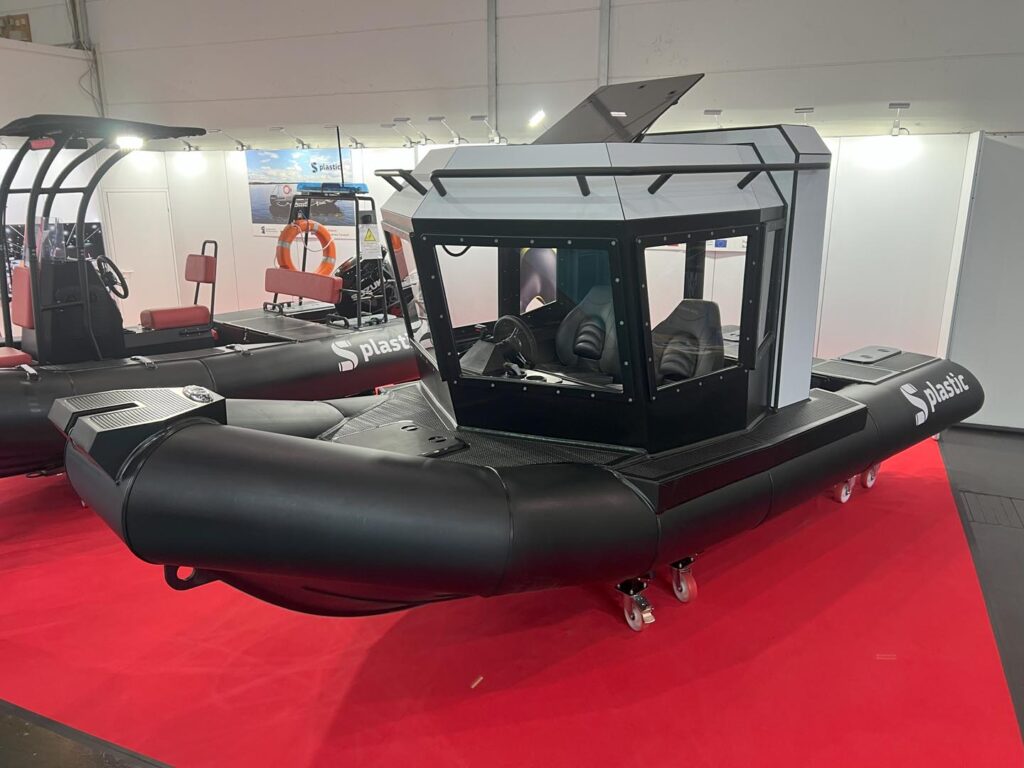
The highly recommended SRB60 Pilot House is a dedicated all-weather patrol craft developed on the proven SRB60 hull. Equipped with an enclosed, heated wheelhouse (Pilot House), it delivers superior protection for crew and electronic navigation systems during prolonged patrols in freezing rain, gale-force winds, and rough seas.
Frequently Asked Questions (FAQ)
What are the main advantages of HDPE patrol boats for public agencies?
HDPE patrol boats provide unmatched impact resistance, complete corrosion immunity in saltwater, high fuel efficiency due to lightweight design, and practically zero maintenance. Inherent positive buoyancy ensures unsinkability, providing exceptional crew safety during high-risk operations. Furthermore, their multi-decade working life (over 20 to 50 years) delivers unbeatable lifecycle value for public authorities.
Are HDPE craft suitable for water police and environmental enforcement?
Yes, HDPE craft are ideally suited for police and environmental agencies. They are widely deployed for waterway patrols, anti-poaching operations, spill monitoring, and rapid emergency intervention. Their rugged hulls tolerate repeated contact with concrete piers, lock walls, and shallow riverbeds without cosmetic or structural damage.
How do HDPE patrol boats perform during search and rescue operations?
HDPE patrol and rescue boats excel in emergency scenarios. Lightweight yet rigid construction provides swift acceleration and precise high-speed maneuvering. High inherent buoyancy and wave-impact absorption ensure a smooth, stable platform on choppy waters, while wide open deck spaces accommodate stretchers, medical gear, and rescued personnel.
What are the operating costs of HDPE boats compared to conventional vessels?
HDPE craft deliver dramatically lower long-term operating costs. They require no annual antifouling paint, no sacrificial anodes, and no gelcoat repairs. The material never suffers from osmosis or corrosion, reducing fleet maintenance budgets by over 50% compared to fibreglass or aluminium alternatives.
How do HDPE patrol craft perform in extreme weather and ice conditions?
HDPE hulls are built for heavy-duty service in extreme conditions. The material retains full mechanical elasticity down to -60°C and up to +80°C, meaning it does not crack in sub-zero frost or when nudging floating ice. The hull absorbs heavy wave impacts smoothly, protecting crew and onboard electronics.
Do HDPE patrol boats require specialized operator certification?
Operating standards depend on national maritime regulations, engine power, and vessel length. The 5.8-metre SRB60 is typically operated by personnel holding standard motorboat or professional commercial/agency maritime licenses. Professional crews receive targeted training to maximize high-speed intercept and tactical capabilities.
What is the expected service lifespan of an HDPE patrol boat?
A well-maintained HDPE patrol boat provides an operational service life of well over 20 to 50 years. Because the polymer does not degrade from UV exposure, saltwater corrosion, or structural fatigue, it significantly outlasts fibreglass and conventional RIB inflatables.
Are HDPE patrol craft environmentally sustainable?
Yes. HDPE is 100% recyclable and non-toxic. It requires no chemical antifouling paints, preventing biocide runoff into delicate waterways. The production process consumes less energy, and obsolete hulls can be fully reprocessed into high-grade polymer products.
What are the primary technical specifications of the SRB60 patrol craft?
The TJ Boats SRB60 has an overall length of 5.83 metres and a 2.20-metre beam. Engineered with a multi-chamber HDPE hull and configured with outboard propulsion (80–150 HP), it accommodates up to 8–10 personnel with a generous payload capacity of up to 1,390 kg.
How does HDPE compare with aluminium and fibreglass?
HDPE dampens acoustic noise and hull vibration far better than aluminium or GRP, delivering a noticeably quieter ride. Unlike aluminium, it never suffers from galvanic or pitting corrosion in saltwater. Unlike fibreglass, it does not crack, chip, or suffer from osmosis upon hard impact.
Which agency duties are best served by HDPE patrol craft?
HDPE patrol craft excel at waterway surveillance, port and maritime infrastructure security, flood disaster response, fishery protection, environmental spill monitoring, diver support, and emergency medical evacuations in remote or shallow coastal regions.
Can HDPE patrol boats be customized for specific agency requirements?
Yes. HDPE allows exceptional outfitting flexibility. Vessels can be custom-fitted with enclosed heated wheelhouses (Pilot House), specialized dive ramps, jockey seats, radar arches, weapons lockers, thermal cameras, and tailored electrical suites to match any mission profile.