


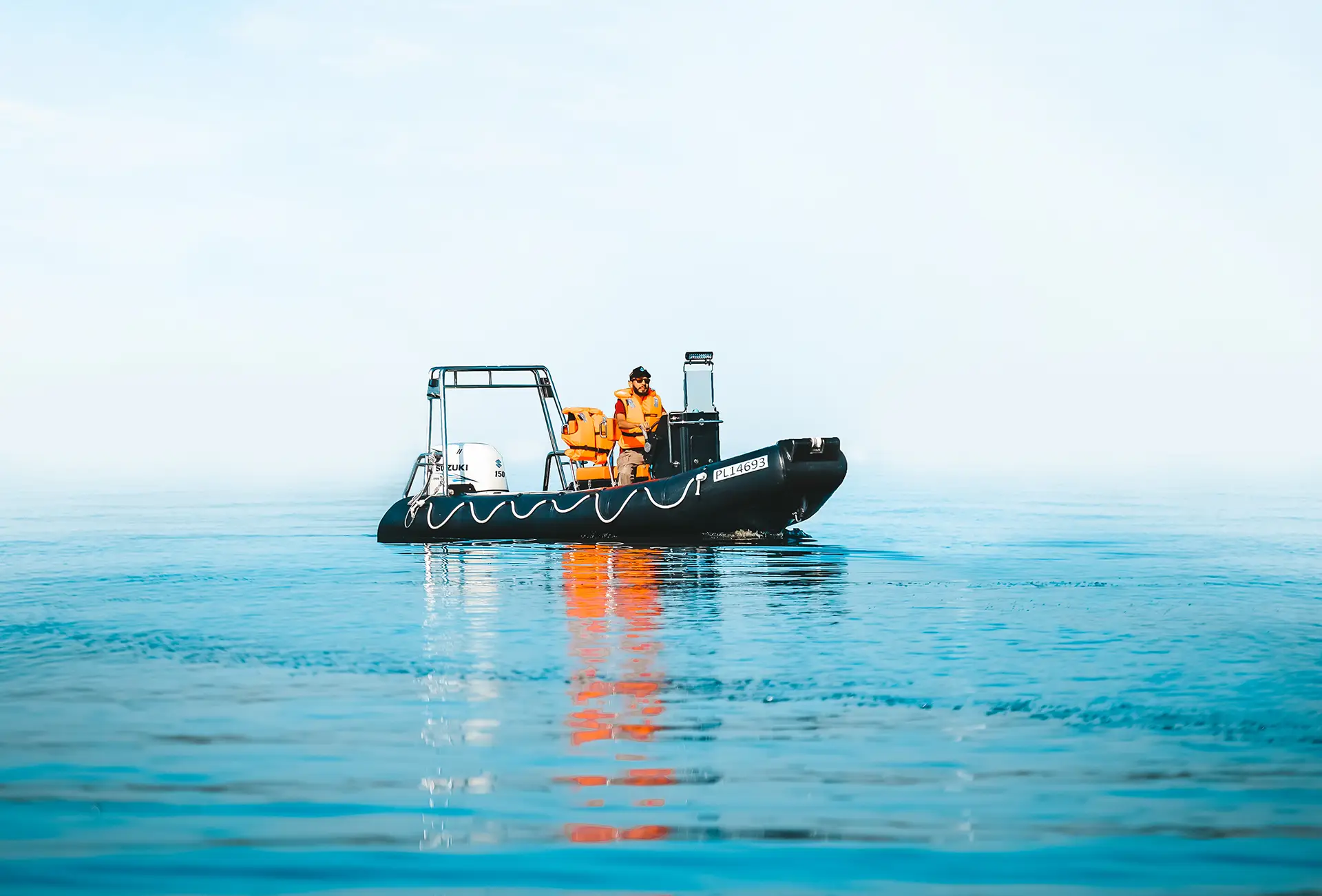
HDPE Workboats for Demanding Conditions
High-Density Polyethylene (HDPE) workboats represent a major breakthrough in vessel construction technology for emergency services, fire departments, and commercial operators working in extreme marine conditions. The TJ Boats SRB60 is a specialised motorboat combining proven HDPE technology with a rigid hybrid (RIB-type) design, engineered for the most demanding operational missions. Measuring 5.8 metres in length with a heavy-duty polyethylene hull, this craft offers the ideal platform for rescue units, fire services, and commercial patrol teams requiring maximum structural toughness and minimal operating costs.
HDPE Technology – A Revolution in Commercial Boatbuilding
High-Density Polyethylene (HDPE) is an advanced structural polymer resetting industry benchmarks for commercial utility craft. The heavy-walled seamless hull exhibits monumental resistance to impacts, abrasive friction, UV radiation, and harsh marine environments. Unlike conventional fibreglass (GRP) hulls, HDPE workboats require zero antifouling painting, eliminating haul-out downtime and maintenance overheads.
With a density lighter than water, HDPE provides positive inherent buoyancy. Its physiological neutrality and total resistance to salt solutions make it ideal for dependable service in both freshwater and demanding marine waters. The polymer retains full mechanical toughness across a vast temperature spectrum from -60°C up to +80°C, enabling uninterrupted year-round service even in freezing winter conditions.
Commercial & Agency Workboats – Safety and Specialisation
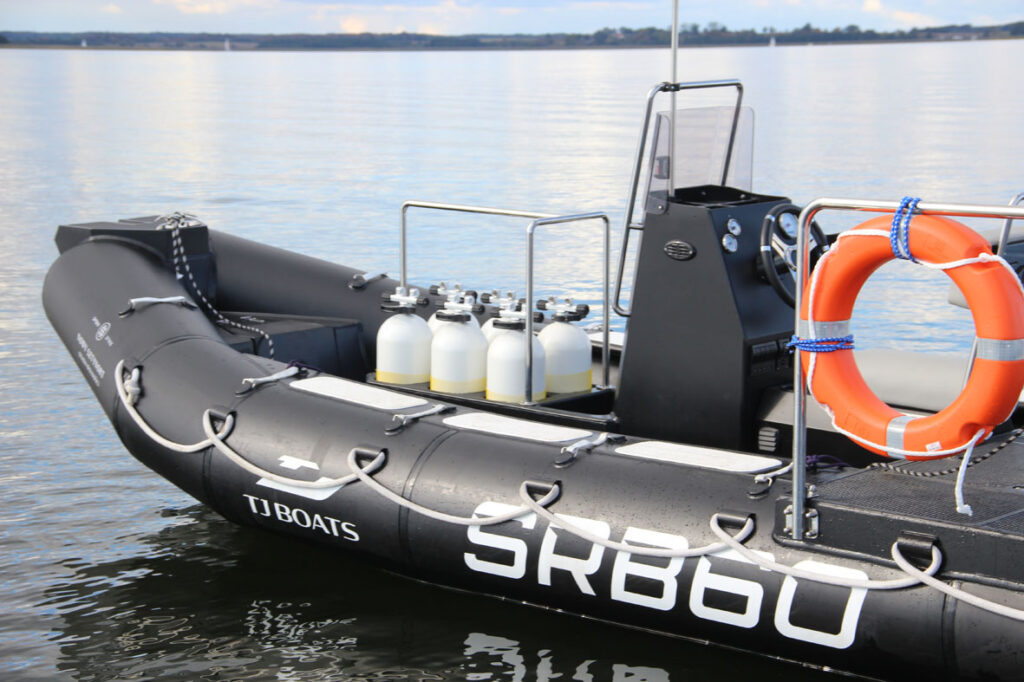
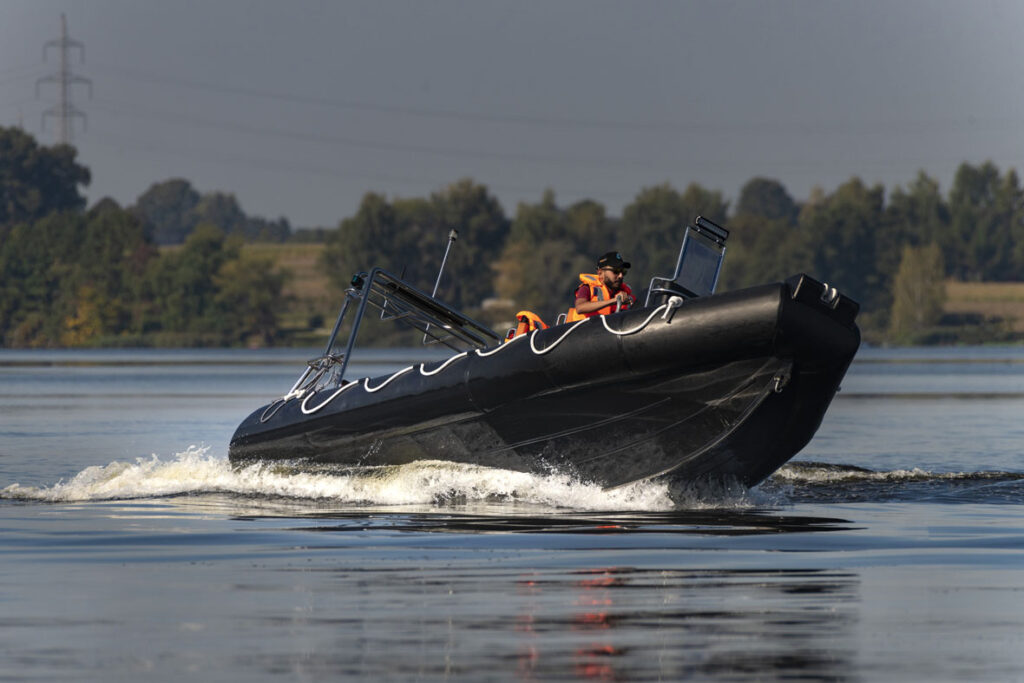
Engineered specifically for commercial crews, emergency response teams, and marine contractors, the SRB60 accommodates up to 8 crew members, making it ideal for coordinated team actions during rescue operations, water patrols, and port security. The solid HDPE hull design eliminates the primary vulnerability of conventional fabric inflatables – susceptibility to punctures and tears – while maintaining exceptional seaworthiness, smooth wave handling, and rock-solid platform stability.
These craft serve as standard equipment for:
- Volunteer and State Fire Brigades
- Water Rescue Services and Lifeguard Associations
- Flood Relief and Emergency Water Rescue Units
- Civil Protection and Crisis Management Agencies
- Inland and Coastal Waterway Patrol Services
Crew safety is guaranteed by extensive high-grip anti-slip deck surfaces, ergonomic grab rails, and an unsinkable hull architecture with watertight compartmentalised buoyancy chambers. All craft are designed and engineered in compliance with EU Directive 2013/53/EU, certifying adherence to the highest maritime safety standards.
Heavy-Duty Operations – Unmatched Structural Toughness
HDPE workboats are purpose-built for continuous service in the harshest marine environments without risk of structural failure. The heavy-duty hull easily absorbs heavy mechanical impacts, allowing confident navigation in shallow waters, around rocky shallows, and during demanding mooring maneuvers along industrial quays. The material is fully immune to osmosis, never peels, and does not corrode – delivering massive operational advantages over fibreglass craft during rigorous commercial use.
Outstanding chemical resilience ensures complete immunity to aggressive acids, alkalis, oils, and most organic solvents, making HDPE workboats the premier choice for polluted industrial waters, chemical response scenarios, and spill containment. Solid construction with uniform hull wall thicknesses up to 10 mm delivers extraordinary longevity – HDPE vessels can remain in active service for over 50 years without degradation.
Operating Economics – Minimal Lifecycle Expenditure
A paramount operational advantage of HDPE commercial workboats is their exceptionally low total cost of ownership. Thanks to the inert polymer construction, these vessels require none of the costly upkeep associated with fibreglass – eliminating periodic repainting, gelcoat repairs, osmosis treatments, and sacrificial anodes. The low hull weight paired with high rigidity results in superior fuel efficiency, effortless trailering, and agile maneuvering.
HDPE is a 100% recyclable material that can be reprocessed repeatedly without losing its physical properties, making it an exemplary match for sustainable public procurement policies. A service lifespan spanning several decades makes HDPE workboats a premier, capital-efficient investment for municipal authorities, port agencies, and commercial contractors requiring predictable, rock-bottom operating costs.
Technical Capabilities of the SRB60 Model
The SRB60 measures 5.83 metres in overall length with a generous 2.20-metre beam. An integrated fuel tank delivers substantial operational range, while outboard engine compatibility provides flexible power options tailored to mission profiles. A completely customisable deck layout accommodates diverse mission requirements – from carrying emergency salvage gear and dive equipment to integrating sophisticated communication and navigation suites.
The vessel can be delivered in versatile mission configurations – from an open working deck to specialized dive-support layouts and firefighting pump setups. HDPE extrusion welding enables straightforward modifications, retrofits, and equipment upgrades throughout the vessel’s lifecycle without compromising hull integrity.
Commercial & Operational Applications
HDPE workboats provide exceptional versatility across a broad spectrum of commercial and emergency missions:
- Search & Rescue Operations – rapid deployment, survivor retrieval, and medical evacuation
- Flood Relief Actions – population evacuation and vital supplies transport in debris-strewn floodwaters
- Water Patrol & Security – waterway monitoring, border surveillance, and maritime event security
- Firefighting Support – direct waterborne access to fires in remote or shallow coastal areas
- Diving Support Platform – stable, spacious workstation for commercial and rescue dive teams
- Environmental & Spill Response – operations in contaminated waters and ecological monitoring
- Tactical & Port Operations – harbour logistics, transport, and special tactical missions
The all-round versatility of HDPE craft makes them a comprehensive, multi-role asset for organisations requiring a single dependable platform for varied operational demands.
Comparison with Traditional Vessels
| Feature | HDPE Workboats | Fibreglass (GRP) Boats | Traditional RIBs |
|---|---|---|---|
| Impact Resistance | Exceptional (absorbs heavy shocks) | Moderate (brittle gelcoat) | Low (susceptible to puncture) |
| Maintenance | Minimal (no painting or antifouling) | High (frequent painting, osmosis risk) | Moderate (tube replacement & upkeep) |
| Service Lifespan | 50+ years | 15–25 years | 10–15 years |
| UV Resistance | Complete (UV-stabilised polymer) | Requires protective coatings | Moderate (fabric degrades over time) |
| Repair Method | Simple & fast (extrusion welding) | Complex & messy (lamination) | Temporary glued patches |
| Weight | Low to moderate | Moderate to heavy | Moderate |
| Recyclability | 100% recyclable | Very difficult / non-recyclable | Limited / non-recyclable |
Why Choose Our HDPE Workboats?
HDPE workboats represent the cutting edge of utility craft design for professional operators. By combining proven offshore geometry with revolutionary polymer technology, TJ Boats delivers craft of unprecedented durability, operational readiness, and lifecycle economy. For rescue agencies, emergency services, and commercial operators in extreme marine conditions, investing in an HDPE workboat ensures decades of trouble-free performance with minimal maintenance and maximum crew protection.
Key Advantages of HDPE in Workboats
Durability
- Monolithic impact and abrasion resistance
- Zero cracking, peeling, or corrosion
- 50+ years operational lifespan without material fatigue
Economy
- Zero antifouling painting or gelcoat maintenance
- Reduced fuel consumption through optimal strength-to-weight ratio
- Virtually non-existent repair expenses
Versatility
- Operational range from -60°C to +80°C
- Certified for freshwater and harsh marine saltwater
- Year-round, all-weather continuous service
Safety
- Unsinkable hull with watertight buoyancy chambers
- High-grip non-slip textured working surfaces
- Full compliance with EU Directive 2013/53/EU
Sustainability
- 100% recyclable structural polymer
- Multiple recycling cycles without property degradation
- Zero toxic biocide leaching into aquatic ecosystems
Chemical Resistance
- Total resistance to intense UV radiation
- Complete immunity to acids, alkalis, and fuel oils
- Absolute galvanic and saltwater corrosion immunity
Flexibility
- Freely adaptable modular deck layout
- Effortless retrofitting of mission equipment
- Fast, reliable repairs via extrusion welding
Engineering
- Monumental strength-to-weight structural ratio
- Uniform solid wall thickness up to 10 mm
- Seamless, multi-chamber heavy-duty hull
FAQ
1. How do HDPE workboats differ from traditional fibreglass craft?
HDPE workboats exhibit vastly superior mechanical impact resistance and eliminate the need for regular hull maintenance such as antifouling painting or osmosis prevention. The polyethylene hull never corrodes, resists sharp impacts without cracking, and retains its physical properties for over 50 years. In contrast, fibreglass hulls require regular sanding, painting, and costly gelcoat repairs. Furthermore, HDPE is 100% recyclable, making it an environmentally sound choice.
2. Are HDPE workboats suitable for use in extreme weather and ice?
Yes, high-density polyethylene maintains its toughness and elasticity across a temperature range of -60°C to +80°C. This allows year-round service even in sub-zero Arctic conditions with floating ice debris. The material does not become brittle in freezing temperatures, is unaffected by thermal cycling, and resists intense UV exposure.
3. Which emergency services and organisations utilize HDPE workboats?
HDPE craft are widely deployed by municipal and volunteer fire brigades, water rescue teams, civil protection units, police forces, and environmental monitoring agencies. They are also standard equipment for commercial harbour authorities, aquaculture operators, and military patrol units operating in demanding aquatic environments.
4. How low are operating and maintenance costs compared to other craft?
Maintenance costs for HDPE craft are drastically lower than those of fibreglass or aluminium vessels. They require no antifouling paint, no zinc anode replacements, and no gelcoat repairs. Their long operational lifespan (50+ years) and high impact tolerance virtually eliminate repair downtime and spare part expenses, ensuring maximum budget efficiency for public and commercial fleets.
5. Can an HDPE hull be easily repaired if damaged?
Yes, HDPE hulls can be quickly repaired using portable plastic extrusion welding equipment. The repair process is rapid, structurally seamless, and significantly less expensive than fibreglass lamination. Repairs can even be carried out in field conditions, allowing operational craft to return to service immediately.
6. What is the expected service lifespan of an HDPE workboat?
Quality HDPE craft can remain in commercial service for more than 50 years without loss of mechanical integrity. The material is fully immune to weathering, UV degradation, osmosis, and saltwater corrosion, making HDPE the most durable hull construction material available on the commercial market.
7. Is the SRB60 workboat suitable for open coastal waters?
Yes, the SRB60 is CE Category C certified for coastal waters, estuaries, bays, and large inland waterways. Its rigid hybrid hull form provides outstanding wave-cutting performance, high dynamic stability, and excellent buoyancy even in rough coastal seas.
8. How many crew and passengers can the SRB60 accommodate?
The SRB60 is engineered to carry up to 8 to 10 personnel with a total load capacity of up to 1,390 kg. The generous deck space allows ample room for crew members, rescued individuals, and specialized commercial or emergency equipment.
9. Are HDPE workboats environmentally friendly?
Yes. HDPE is a non-toxic, physiologically inert polymer that is 100% recyclable. Because it never requires toxic antifouling paints or solvent-based varnishes, no biocides or microplastics leach into marine ecosystems. At the end of its decades-long working life, the hull can be completely melted down and repurposed.
10. What is the operational range of the SRB60?
The SRB60 is equipped with a high-capacity internal fuel tank designed for extended patrol and rescue missions. While the exact range depends on the selected outboard engine (typically 80–150 HP) and throttle settings, the efficient hull geometry and light weight deliver outstanding fuel economy and wide operational radius.
11. Can the SRB60 deck be customised for specific operational roles?
Yes. HDPE allows exceptional flexibility for deck outfitting. The SRB60 can be configured with specialized consoles, jockey seating, dive bottle racks, folding rescue ramps, stretcher mounts, navigation arches, radar masts, and firefighting pump connections to suit any commercial or agency requirement.